Music-to-Texture Synesthesia Explained: How It Works and What It Feels Like
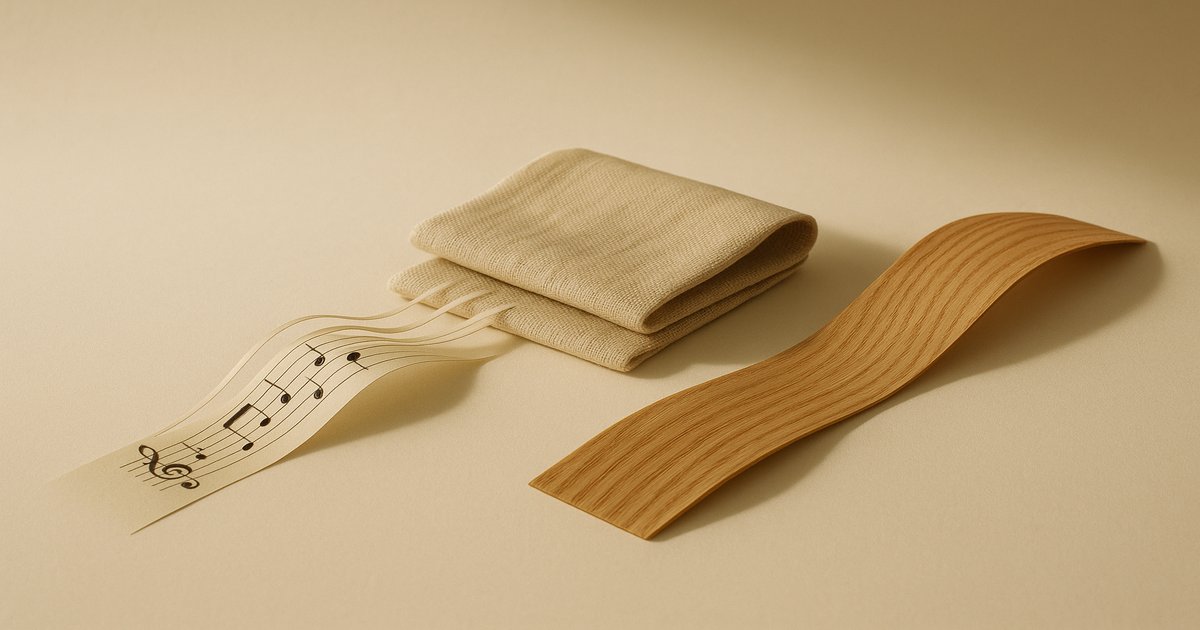
Music-to-Texture Synesthesia Explained: How It Works and What It Feels Like
Quick Answer
Music-to-texture synesthesia is a form of synesthesia where listening to music or sounds reliably triggers tactile sensations—such as feeling smoothness, sharpness, fuzziness, or pressure—on the skin or within the mind’s sense of touch. People with this type of synesthesia don’t just imagine textures; they genuinely feel them as part of their everyday sensory world. The specific textures and triggers vary widely from person to person, and this experience is as real to them as the notes or rhythms themselves.

What Is Music-to-Texture Synesthesia?
To start, it helps to know what synesthesia means. Synesthesia is when senses cross over in a way that’s involuntary and consistent for the person experiencing it. Some people see colors when they read letters, or taste flavors when they hear certain words. Music-to-texture synesthesia is a specific type where sound—especially music—evokes textures or tactile feelings.
Imagine sitting in a concert hall and, as the violinists launch into a tremolo, you not only hear the shimmering sound but also feel a feather-light tickling running down your arms. Or maybe a deep cello note gives you the sense of thick velvet pressing gently against your palms. For some, these sensations are felt on the skin. For others, it’s more like a deep, internal sensation—a “felt” sense that’s hard to pin down but unmistakable all the same.
If you’re curious about the different forms of synesthesia, you might find our guide to synesthesia types helpful.

What Does Music-to-Texture Synesthesia Feel Like?
Describing this experience is a bit like trying to explain a taste to someone who’s never tried it. People often resort to metaphors, because there’s no built-in vocabulary for feeling a song as prickly, syrupy, or gritty. Still, there are some common threads.
Textures Can Be Literal or Abstract:
Some people feel as if their skin is being brushed by invisible hands—like the sensation of silk, sandpaper, or bubbles. Others sense more abstract, impossible textures: “like static electricity but soft,” or “the feeling of a cool wind made solid.”
Location and Intensity Vary:
For a few, these sensations are localized (say, on the forearms or the back of the neck). For others, it’s a diffuse, global feeling, or even an emotional texture that’s hard to place anatomically.
Relatable Example:
Alex, a graphic designer, recalls listening to Björk’s “Hyperballad” as a teenager and suddenly feeling the chorus as a wash of tiny, cool marbles rolling over her shoulders. “It wasn’t distracting or uncomfortable,” she says. “It was just part of how I heard the song—like my own private dimension layered over the music.”
Not Everyone Experiences It the Same Way:
Some people get texture only from certain instruments or genres. Others might feel it with any sound—rainfall, a squeaky chair, a dog’s bark. The key is that, for them, these texture experiences are consistent (the same song produces the same feeling each time) and involuntary (they happen automatically, not by choice).
How Does It Work?
The science behind synesthesia is still unfolding, but most researchers agree it involves unusual connections between brain regions that process different senses. In music-to-texture synesthesia, it’s as if the auditory and somatosensory systems are neighbors who’ve knocked down the fence between their yards.
A Simple Analogy:
Imagine your brain as a city, with neighborhoods for each sense—hearing, touch, sight, and so on. In most people, the “hearing” and “touch” neighborhoods are separate, but in music-to-texture synesthetes, there are shortcut roads connecting them. When a song plays, the traffic flows not just to the hearing district but also spills into the touch zone. The result? You don’t just hear music; you feel it, sometimes as vividly as you’d feel a real object.
Consistency and Involuntariness:
A defining feature is that these experiences are consistent. If a particular song feels “spiky” once, it likely always will. These sensations aren’t brought on by imagination or suggestion—they happen on their own, reliably.
For more about how the senses interact in synesthesia, explore our What Is Synesthesia? article.
What Triggers Music-to-Texture Synesthesia?
The Obvious: Music
Most people with this form of synesthesia find that music is the main trigger. This can include:
- Melodies, harmonies, and chords
- Individual instruments (a flute might feel airy; a bass drum might hit like a soft punch)
- Vocals, especially unique timbres or vibratos
The Subtle: Other Sounds
It’s not only music. Everyday sounds can elicit textures too. The crunch of gravel underfoot, the drone of a refrigerator, or even the tone of someone’s voice might set off a cascade of tactile impressions.
Patterns Matter
For some, the texture is tied closely to specific patterns—like a staccato rhythm feeling “bumpy,” while a legato passage glides like satin. Changes in tempo or volume can affect the quality or intensity of the sensation.
Personal Associations
There’s no universal codebook. For one person, a trumpet might feel scratchy; for another, it’s as smooth as glass. A lot depends on the individual’s brain wiring, and sometimes on early formative experiences with sound.
If you’re interested in exploring your own sensory associations, try our Synesthesia Visualization Tool to map out your unique patterns.
Common Misconceptions (And Gentle Clarifications)
Misconception: “Isn’t This Just Imagination?”
It’s a fair question. People often assume that music-to-texture synesthesia is just a strong association or a vivid imagination at work. The reality is a bit different. While imagination can create rich sensory images, synesthesia is involuntary and consistent—a song feels “fuzzy” or “sandpapery” every time, not just when the person decides to imagine it.
Gently Clarifying:
It’s more like a reflex than a daydream. Just as you can’t not feel the cold when you touch ice, a synesthete can’t avoid feeling the texture when they hear a certain sound.
Misconception: “Doesn’t Everyone Get Goosebumps From Music?”
Many people get chills, goosebumps, or feel emotionally moved by music. But music-to-texture synesthesia is not the same as an emotional reaction. The tactile sensations are specific, consistent, and often much more detailed than the general “tingles” most people experience.
If you’re wondering about the difference between synesthetic experiences and more common sensory responses, our comparison guide might help.
Is Music-to-Texture Synesthesia Related to Other Types?
Yes and no. Synesthesia comes in many flavors, and music-related synesthesia is a broad category. Some people see colors when they hear music (chromesthesia), while others might visualize shapes, experience taste, or—as in this case—feel textures.
How It Differs:
- Chromesthesia: Music triggers colors or moving patterns, often “seen” in the mind’s eye.
- Music-to-texture synesthesia: Music triggers tactile feelings—somewhere on or in the body, or as an internal sense.
It’s possible to have more than one type, or for the experiences to overlap. Individual variation is huge. But the key difference is in the sensory pathway—the route music takes through someone’s perceptual world.
Living With Music-to-Texture Synesthesia
Everyday Life
For many, this type of synesthesia is simply an extra layer in daily experience. It can make listening to music richer, more engaging, and sometimes overwhelming. If you’re in a noisy café and every clatter of cups registers as a jolt of roughness on your hands, it might be distracting. On the other hand, a favorite song might wrap you in a cocoon of softness—a private comfort on a hard day.
Creativity and Coping
Some synesthetes find creative inspiration in their sensory cross-wiring. Musicians, sculptors, and writers sometimes use these experiences to shape their work. Others might need to build little rituals to manage overstimulation—choosing softer music when tired, or wearing noise-canceling headphones in harsh environments.
Validation
If you’re reading this and recognizing your own experience, you’re not alone. The world is full of quiet, beautiful variations in how people sense and interpret reality. These differences don’t mean something is wrong or broken—they’re just different ways of being human. There’s no “right” way to sense the world.
For more validation and shared stories, you might like our community stories page.
FAQ
1. Is music-to-texture synesthesia rare?
It’s less commonly reported than some other types, like seeing colors with music or letters. But it’s probably under-recognized, since people often don’t have language for it or assume it’s just imagination.
2. Can you develop music-to-texture synesthesia later in life?
Most people report having these experiences as far back as they can remember, but there are rare accounts of new synesthetic sensations emerging after neurological events or during intense creative periods.
3. Are the textures always pleasant?
Not always. Some textures can be neutral or even uncomfortable, especially with harsh or discordant sounds. But many synesthetes describe a broad range of sensations, including pleasurable ones.
4. Do the textures correspond to real-world materials?
Sometimes, but not always. Some are familiar (like velvet, sand, water), while others are abstract or impossible—like “liquid electricity” or “a breeze made solid.”
5. Can you control or turn off the sensations?
Generally, no. The sensations are involuntary and triggered by sound. Some people can avoid certain triggers, but the experience itself isn’t something you can will away.
6. Is it connected to other forms of sensory sensitivity?
Some synesthetes notice general sensory sensitivity, but plenty do not. Each person’s sensory profile is unique.
7. How do I know if I really have music-to-texture synesthesia?
If your experiences are consistent, involuntary, and reliably linked to specific music or sounds, and if they feel as real as any other physical sensation, you might fit the pattern. Our self-reflection guide can help you explore this further.
Summary
Music-to-texture synesthesia adds an unexpected dimension to everyday life. For those who experience it, music isn’t just something to be heard—it’s something to be felt, as real as the warmth of sunlight or the chill of a breeze. Whether it’s the prickly thrill of a guitar solo or the creamy smoothness of a slow ballad, these sensations are a natural and valuable part of a person’s sensory landscape.
There’s no one “right” way to experience synesthesia, and no single story captures it all. But if you recognize yourself here, know that your way of sensing the world is valid, interesting, and uniquely yours. If you’d like to explore more, our What Is Synesthesia and music synesthesia types pages offer deeper dives and resources for the synesthetic community—and for the simply curious, too.
Related Articles

Number-Form Synesthesia Explained: How It Works and What It Feels Like
Explains a specific type of synesthesia, including sensory triggers, lived experience, and how it differs from other types.

Sequence-Space Synesthesia Explained: How It Works and What It Feels Like
Explains a specific type of synesthesia, including sensory triggers, lived experience, and how it differs from other types.

Letter-Personality Synesthesia Explained: How It Works and What It Feels Like
Explains a specific type of synesthesia, including sensory triggers, lived experience, and how it differs from other types.