Chromesthesia Explained: How It Works and What It Feels Like
Chromesthesia Explained: How It Works and What It Feels Like
Quick Answer
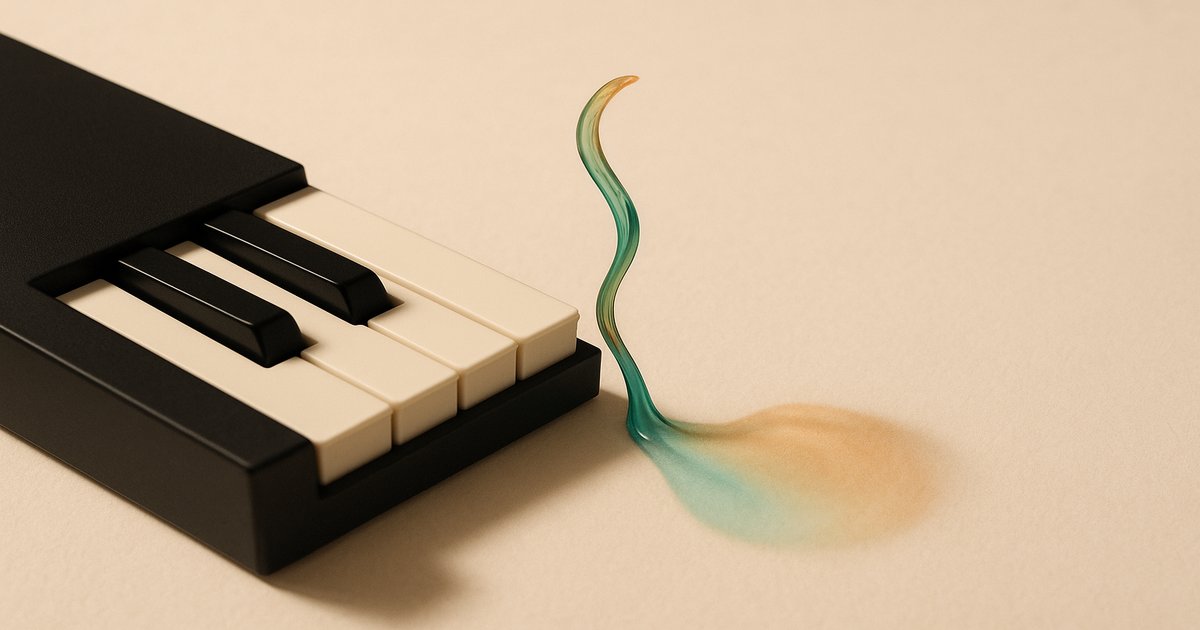
Chromesthesia is a type of synesthesia where sounds—like music, voices, or everyday noises—trigger experiences of color, shape, or movement in the mind’s eye. For some, a piano note might appear as a burst of blue; for others, a car horn might flash as a jagged streak of orange. The experience is involuntary, consistent for each person, and as real to them as an afterimage from a bright light. Chromesthesia can feel beautiful, distracting, or just quietly present—each synesthete’s experience is unique. If you’re curious about synesthesia in general, our What Is Synesthesia guide is a great place to start.

What Is Chromesthesia?
Imagine hearing a friend’s laughter and seeing a swirl of yellow, or catching the sound of a violin and watching a ribbon of silver glide through your mind. That’s chromesthesia—a blending of the senses, specifically sound and color. It’s one of the more well-known types of synesthesia, a wider family of perceptual experiences where stimulation of one sense automatically and consistently triggers another.
People with chromesthesia don’t try to conjure these colors. They just happen, as naturally as a shadow follows a moving object. The triggers can range from music and environmental sounds to spoken words or even everyday noises, like the hum of a fridge.
If you’re looking for a broader overview, our Relevant Synesthesia Type page dives into other forms, like grapheme-color synesthesia (seeing colors with letters or numbers) and mirror-touch synesthesia (feeling what others feel).

How Chromesthesia Works
The “how” behind chromesthesia sits at the intersection of neuroscience and mystery. While scientists have found some clues—such as increased connectivity between the brain’s auditory and visual regions—the exact cause isn’t fully mapped out. What’s clear is that chromesthesia isn’t something you can simply turn off, nor is it a quirk you can will into existence.
For chromesthetes, sound and color are intertwined. When a sound enters their awareness, their brains link it to a specific color, shape, or movement. This isn’t imagination or metaphor; it’s a consistent, perceptual experience. For instance, the note C-sharp on a violin might always bring a flash of deep green, while the clang of a bell might appear as a bolt of silver.
Some people see colors “out in the world,” almost as if projected onto the air, while others experience the colors internally—like a vivid daydream, but with its own rules and consistency. Both experiences are valid and real.
The Science (Without Getting Too Abstract)
Brain scans of people with chromesthesia sometimes show more cross-talk between areas responsible for processing sound (auditory cortex) and those for vision (visual cortex). It’s as if the brain’s wiring is set up for a bit of crosstalk—like two radio stations overlapping on an old dial. But even among chromesthetes, the experience can vary in intensity and clarity.
What Chromesthesia Feels Like
Describing chromesthesia is a bit like trying to explain color to someone who’s never seen it. The colors, shapes, and movements aren’t imagined or chosen; they simply arrive with the sound, as faithfully as a sunrise follows night.
A Real-Life Example
Take Maya, who grew up thinking everyone saw sound as color. For her, the jingle of her phone was a quick flicker of neon pink. When her brother played guitar, each chord shimmered with its own hue—E major radiated gold, while A minor curled in stormy blue. She remembers sitting in math class, watching the teacher write on the chalkboard, and being distracted not by the lesson but by the teacher’s voice unfurling long, pale green ribbons behind her words.
Maya didn’t realize this was unusual until she mentioned it to a friend, who stared at her in bewildered silence. It was both validating and a little lonely, realizing her private world was invisible to others. Over time, she learned to appreciate her chromesthesia as a unique filter on reality—a secret layer of color woven through everyday life.
What It’s Not
A common misconception is that chromesthesia is the same as associating certain songs with colors because of album covers or mood. While anyone can say, “That song feels blue to me,” chromesthesia is more automatic and persistent. The associations aren’t based on mood, memory, or artistic choice—they’re hardwired, showing up the same way every time.
If you want to compare different synesthesia types, our What Is Synesthesia? article can help clarify the distinctions and overlaps.
Everyday Life with Chromesthesia
Chromesthesia isn’t always a parade of colors. Sometimes it’s subtle, like a gentle overlay or a flash that vanishes as quickly as it arrived. For some, it’s a background feature—pleasant, but easy to ignore. For others, it can be overwhelming, especially in noisy environments where every sound brings a barrage of visual effects.
Music, Noises, and Color
Music is often the most vivid trigger. A single note, a chord, or even rhythm can each have their own color, shape, or texture. Some chromesthetes describe a symphony as a fireworks show in their mind. Others might find certain sounds discordant, not just because of the audio quality, but because the “wrong” color appears—like an off-key note splattering a garish color across an otherwise harmonious palette.
But it’s not limited to music. Everyday sounds can have their own hues—the beep of a microwave, footsteps in a hallway, the whir of a fan. Even voices may bring color, sometimes varying by pitch or timbre.
Living with It
For many, chromesthesia is simply part of life—neither all-consuming nor invisible, just present. It can be soothing, a private art show, or occasionally distracting. Some find that it influences their creative work, while others barely notice it unless they stop and pay attention.
If you’re curious what your own chromesthetic “palette” might look like, you might find our Related Tool or Visualization helpful in mapping out your experiences.
Chromesthesia vs. Other Types of Synesthesia
Not all synesthesia involves color, and not all color-based synesthesia is chromesthesia. The key feature here is that the trigger is sound. In grapheme-color synesthesia, for example, letters or numbers evoke color. In lexical-gustatory synesthesia, words or sounds might trigger tastes.
If you’re wondering which type you—or someone you know—might experience, our Relevant Synesthesia Type page offers comparisons and deeper dives.
One gentle reminder: everyone’s experience is different. Not all chromesthetes see color the same way, just as no two people feel emotion in quite the same shade.
Common Misconceptions About Chromesthesia
“It’s just imagination.”
Chromesthesia isn’t about creative association or wishful thinking. The colors aren’t chosen, and they don’t change with mood or memory. They’re as real and automatic as the sense of taste when you bite into a lemon.
“Everyone experiences it the same way.”
No two chromesthetes have identical color-sound pairings. Even among people who hear the same song, the internal “light show” might be completely different—in color, intensity, and movement.
“It’s a distraction or a problem.”
For most, chromesthesia isn’t a disorder or defect. It can be distracting, especially in noisy settings, but it’s rarely distressing. Many find it enriching, even comforting—a companion sense rather than a hindrance.
A Calming Thought
If you recognize some of these experiences in yourself, you’re not alone. Chromesthesia can feel isolating when it seems like nobody else understands what you’re describing. But there are many others who share this vibrant, layered way of experiencing the world. You don’t have to prove it or explain it away—your perception is valid, and it belongs here.
A Simple Analogy
Think of chromesthesia like having subtitles for music or sound, only instead of words, you get colors and shapes. Just as subtitles quietly spell out what’s being said, chromesthesia adds a silent, visual translation to every sound. It’s not better or worse than hearing alone—just a different way of tuning into the world.
FAQ: Chromesthesia
1. Can chromesthesia be turned off?
Most people with chromesthesia can’t “turn off” the experience. It’s not voluntary, though some learn to tune it out or focus less on the colors in daily life.
2. Are the color-sound pairings the same for everyone?
No. Each person’s pairings are unique and consistent for them, but can differ dramatically from others’.
3. Does chromesthesia make music more enjoyable?
It can, but not always. For some, music becomes a richer, more multisensory experience. For others, certain sounds or songs might be overwhelming or visually jarring.
4. Is chromesthesia linked to creativity or artistic ability?
Some creative people have chromesthesia, but it’s not a requirement for creativity, nor does everyone with chromesthesia become a musician or artist.
5. Can you develop chromesthesia later in life?
Most people report having it since early childhood, but some notice it more as they get older or with certain triggers. There’s still much to learn about how and when it develops.
6. Is chromesthesia a form of synesthesia?
Yes. It’s one of many types. You can read about other forms on our What Is Synesthesia page.
7. How do I know if I have chromesthesia?
If you consistently experience color, shape, or movement in response to sound, without trying to imagine it, you might have chromesthesia. Our Relevant Synesthesia Type page and Related Tool or Visualization can help you explore your experience further.
Summary
Chromesthesia is a vivid, layered way of hearing the world—a private interplay of sound and color that can be as gentle as a pastel wash or as striking as a lightning bolt across the mind’s eye. For those who experience it, chromesthesia isn’t a trick or a party trick; it’s simply the way the world arrives through their senses.
There’s no single way to “do” chromesthesia, no right or wrong pairing of sound and color. Each person’s sensory landscape is as personal as a fingerprint. Whether you find the experience comforting, distracting, or simply intriguing, it’s valid. And while science is still unraveling the full story, lived experience remains the best guide.
If you’re curious to learn more about synesthesia in all its forms, What Is Synesthesia? and our Relevant Synesthesia Type page are good next stops. And if you’d like to visualize or map your own experience, try our Related Tool or Visualization.
However your senses combine, your perception matters. You’re in good company here.
Related Articles

Lexical-Gustatory Synesthesia Explained: How It Works and What It Feels Like
Explains a specific type of synesthesia, including sensory triggers, lived experience, and how it differs from other types.

Time-Space Synesthesia Explained: How It Works and What It Feels Like
Explains a specific type of synesthesia, including sensory triggers, lived experience, and how it differs from other types.

Mirror-Touch Synesthesia Explained: How It Works and What It Feels Like
Explains a specific type of synesthesia, including sensory triggers, lived experience, and how it differs from other types.